For the discerning eye, the era of the clinical, "hospital-chic" neutral is finally drawing to a close. As we look toward 2025, the interior design landscape is shedding its monochromatic skin in favor of a more expressive, intellectual approach: Curated Maximalism.
The Death of the Clinical Neutral
We are witnessing a pivotal shift from "clinical" minimalism to a more "soulful" form of expression. For years, the industry leaned into a sterile perfection that, while photographable, lacked the patina of a life well-lived. Curated Maximalism is the antithesis of this void. It is a design philosophy that favors personality, intentionality, and the sophisticated layering of heritage.
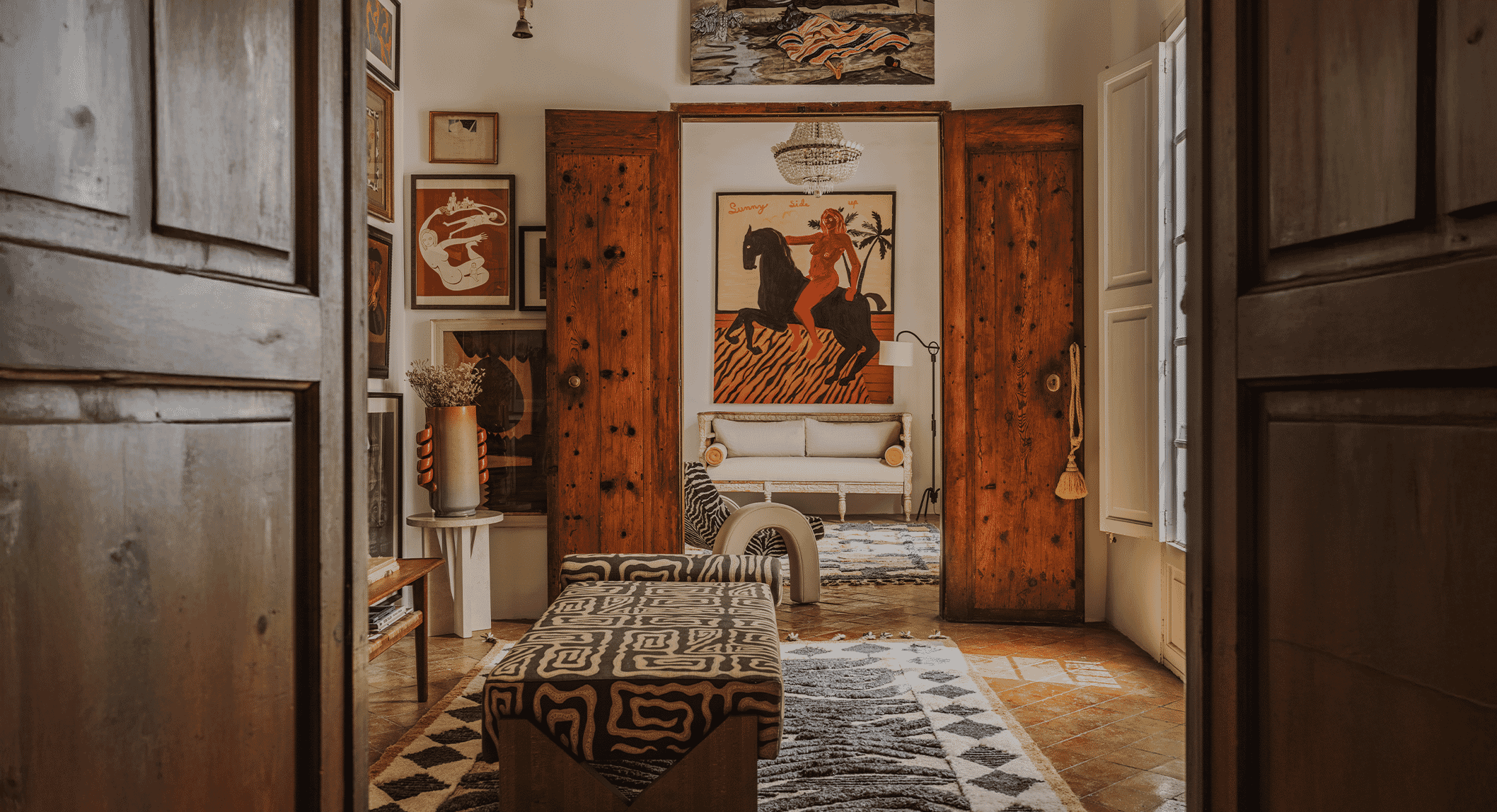
In this hallway, notice how the transition from raw architectural elements—like the rustic timber doors—to eclectic wall art creates an immediate sense of history. This isn't about clutter; it is about the "lived-in" atmosphere where every piece has a lineage. As we move into 2025, your home should no longer look like a showroom, but rather a gallery of your personal trajectory.
The New Palette: Saturated Earth and Nuanced Pastels
The bold interior color palettes of 2026 are already beginning to take root, moving away from safe greys and into what I call "Saturated Earth." We are seeing a move toward "Transformative Teal" and deep, earthy ochres that provide a grounding weight to a room.
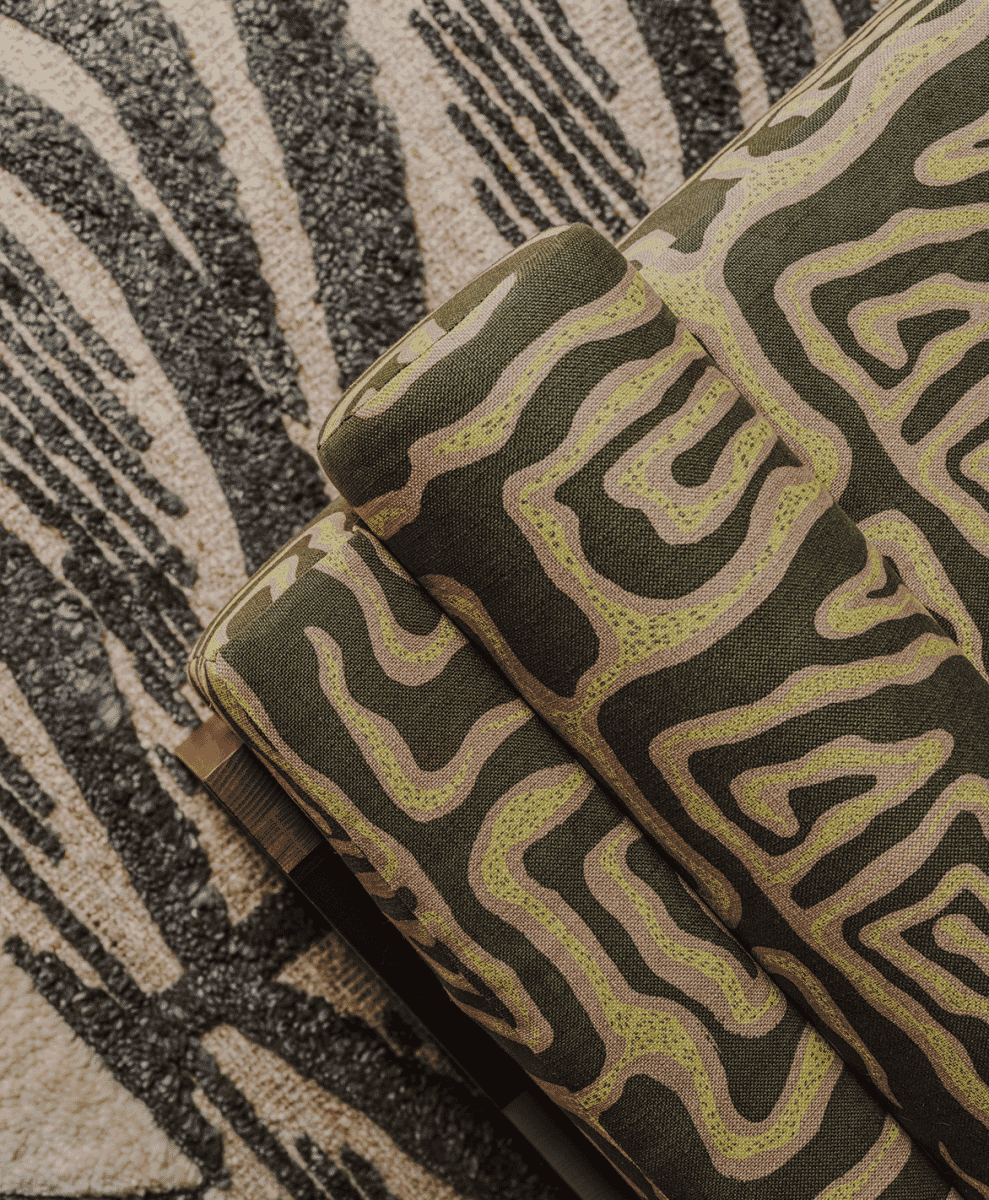
The secret to mastering this new palette lies in unexpected pairings. Think chocolate brown juxtaposed with periwinkle, or a rich burgundy set against a soft butter yellow. These abstract, wavy patterns and olive-green textiles represent a move toward organic complexity. When selecting fabrics, look for materials that offer a "chromatic depth"—colors that seem to change as the light hits the weave. This nuanced approach ensures that even the most vibrant rooms feel sophisticated rather than chaotic.
Textural Layering: The 'Rhythm' Method
One of the most frequent questions I receive is how to balance curated maximalism vs minimalism without the room feeling claustrophobic. The answer lies in the "Rhythm" method. To achieve visual harmony, you must repeat a singular color or motif across at least three different textures—for instance, a velvet cushion, a ceramic vase, and a geometric upholstery pattern.
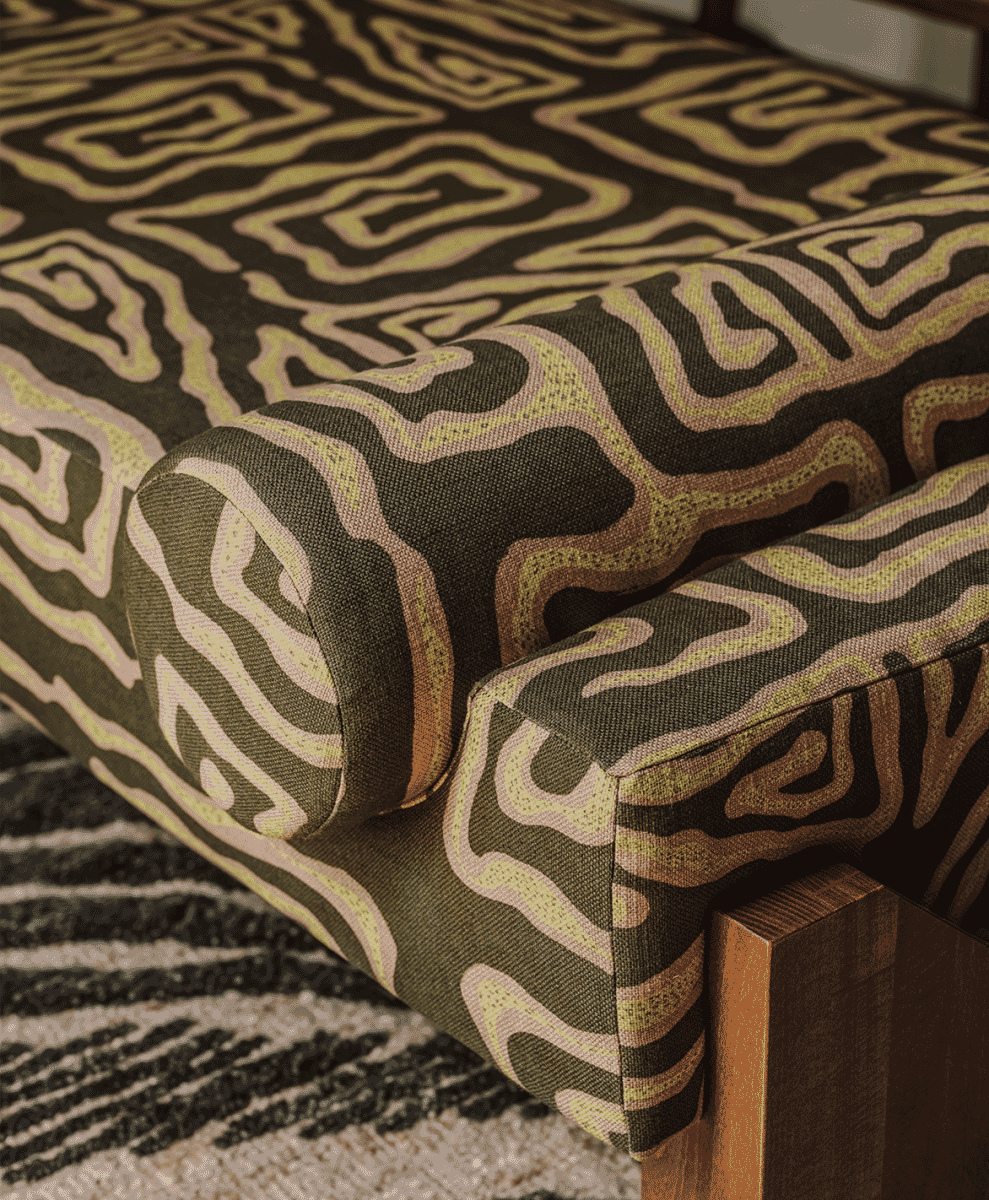
This living space demonstrates the power of textural weight. By utilizing a bold, geometric-patterned sofa as the focal point, the surrounding elements can remain eclectic yet tethered. The rhythm of the pattern draws the eye across the room, creating a sense of movement that feels intentional. This is "Loud Luxury" at its finest—quality materials and daring prints working in concert to create a multisensory experience.
Furniture as Sculpture: The Statement Anchor
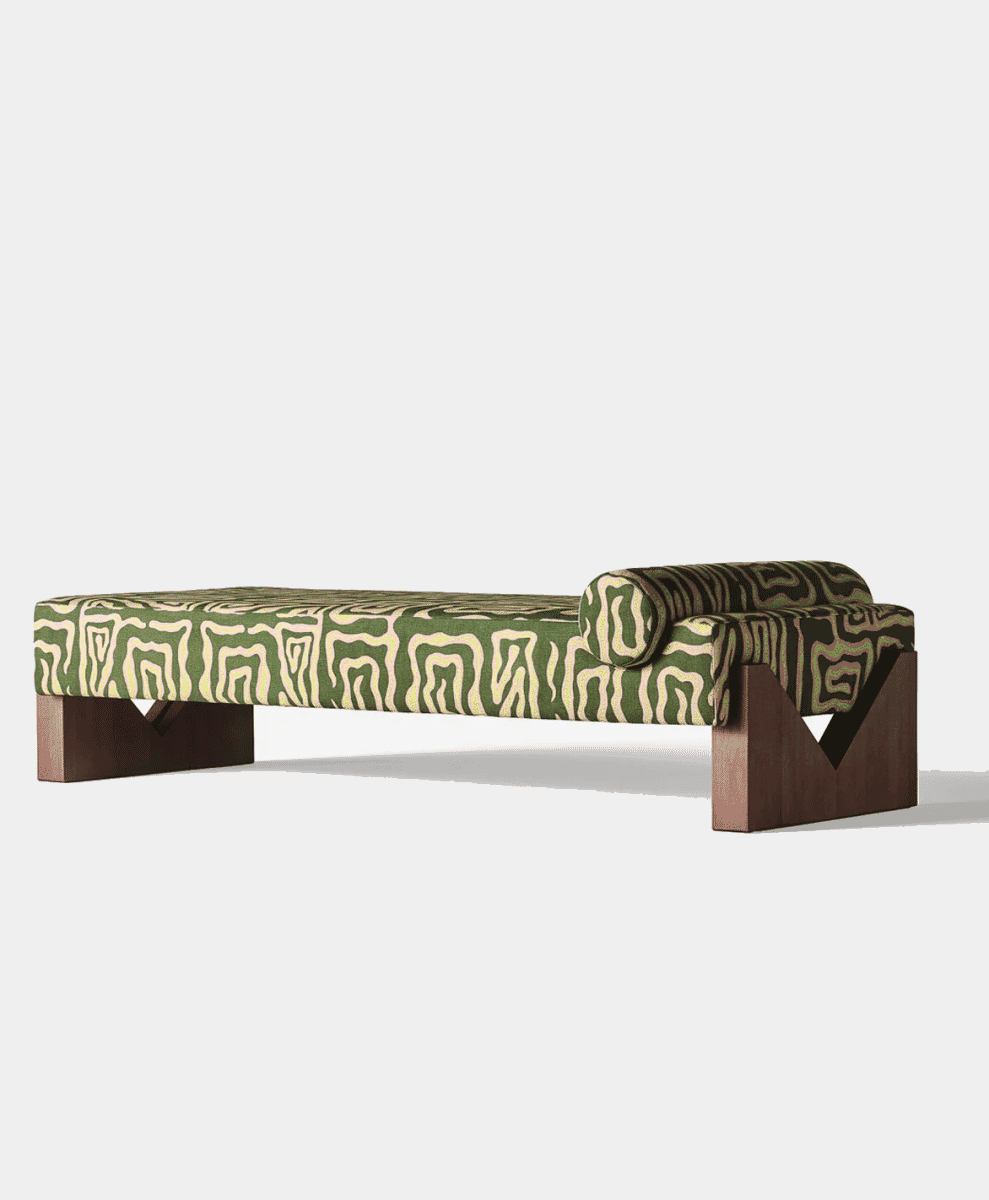
In a maximalist home, furniture is never merely functional; it is sculptural. The 2025 trend focuses on "Livable Luxury," where investment pieces act as the narrative anchors for the room. I am particularly drawn to the curved, avant-garde forms reminiscent of the Dusty Deco x Matthew Williamson collection, where mid-century silhouettes meet high-octane prints.
A statement chaise lounge, like the one pictured, serves as a functional piece of art. Its geometric patterns and bold silhouette provide a counterpoint to more traditional architectural details. When sourcing statement furniture for maximalist homes, look for pieces that possess a strong "architectural silhouette." These items provide the structural integrity needed to support a room filled with diverse art and textiles, ensuring the space feels anchored rather than floating in a sea of decor.
Foundations of Depth: Masterful Rug Layering
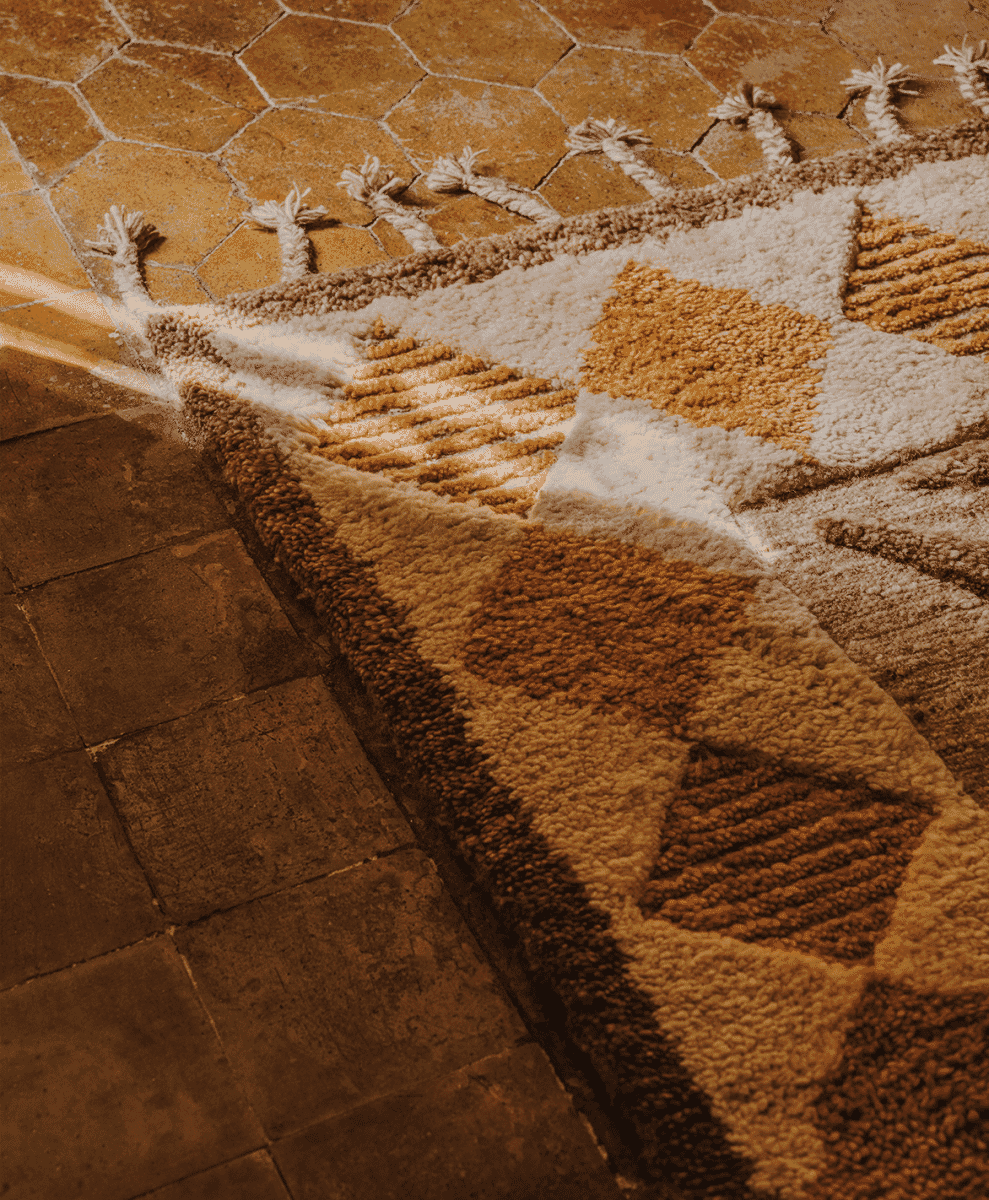
To truly master interior maximalism trends 2025, one must look to the floor. We are seeing the rise of "texture-maxxing," a technique where rugs are used to define zones and add an extra layer of insulation—both literal and visual. Layering a hand-tufted geometric wool rug over cool stone tiles or a larger sisal base creates a sanctuary-like grounding that is essential for large-scale rooms.
The shift toward vintage and antique sourcing is particularly evident in flooring. A zebra-stripe motif or a 1970s-inspired swirling pattern adds an element of "curated excess" that feels authentic rather than manufactured. These rugs act as the foundation of the room's depth; they are the stage upon which your furniture and art perform. For a true investment piece, seek out artisanal rugs with a high knot count and organic dyes—the slight imperfections in the weave are what give the room its soul.
Closing: Designing Your Own Narrative
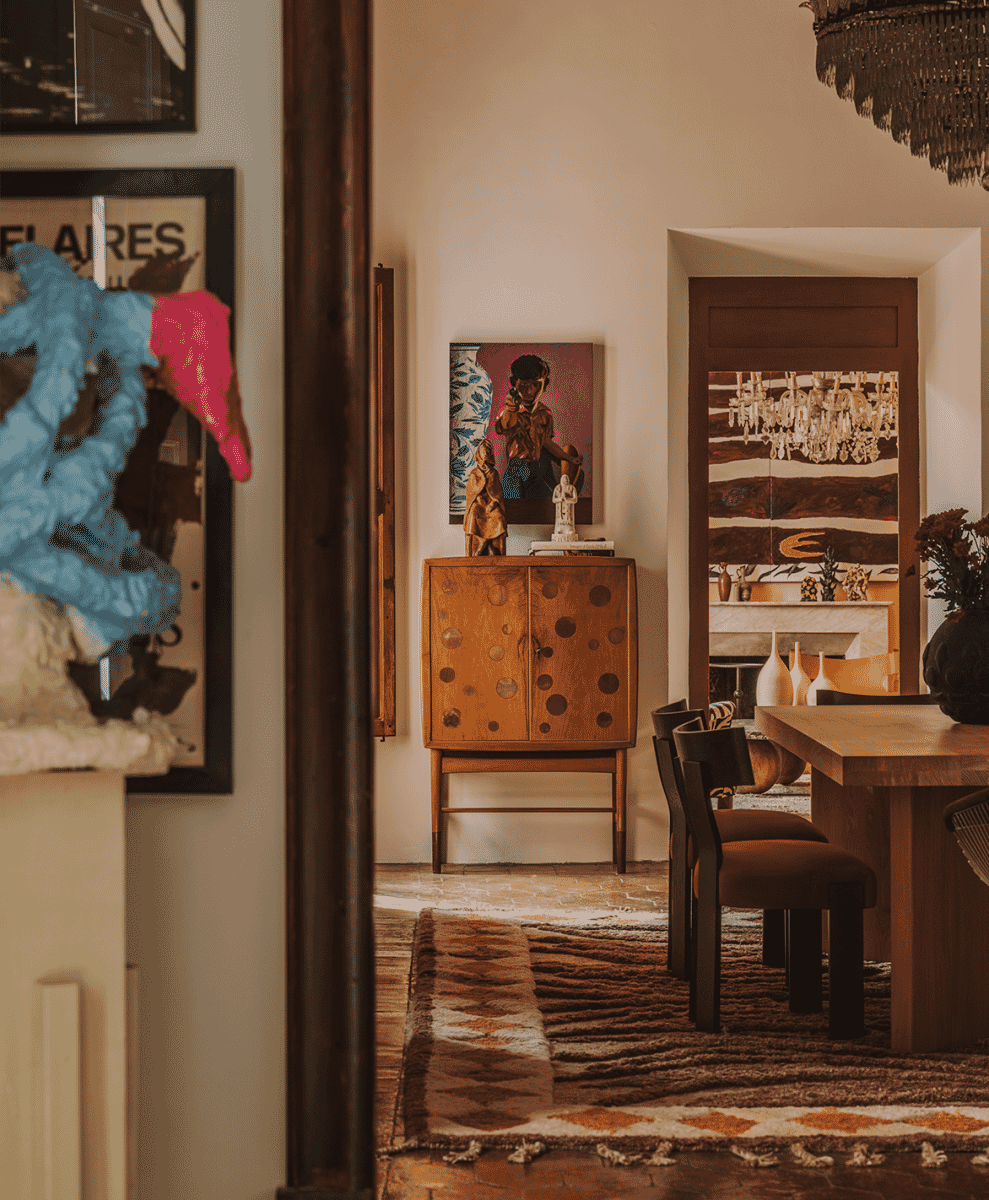
Ultimately, the future of interior design is about the rejection of the generic. As we move beyond beige, the most successful homes will be those that read like a memoir. By blending mid-century anchors—like a beautifully crafted wooden cabinet—with abstract art and warm, saturated tones, you create a space that is uniquely yours.
Maximalism in 2025 isn't about how much you can fit into a room; it’s about the quality of the conversation between the objects you choose to keep. Invest in pieces that carry a narrative, layer them with rhythmic intention, and never be afraid to let your home tell a story that is as complex and vibrant as you are.